

“Beyond the Rectangle: How Biophilic and Organic Rug Shapes Are Defining Modern Indian Homes”

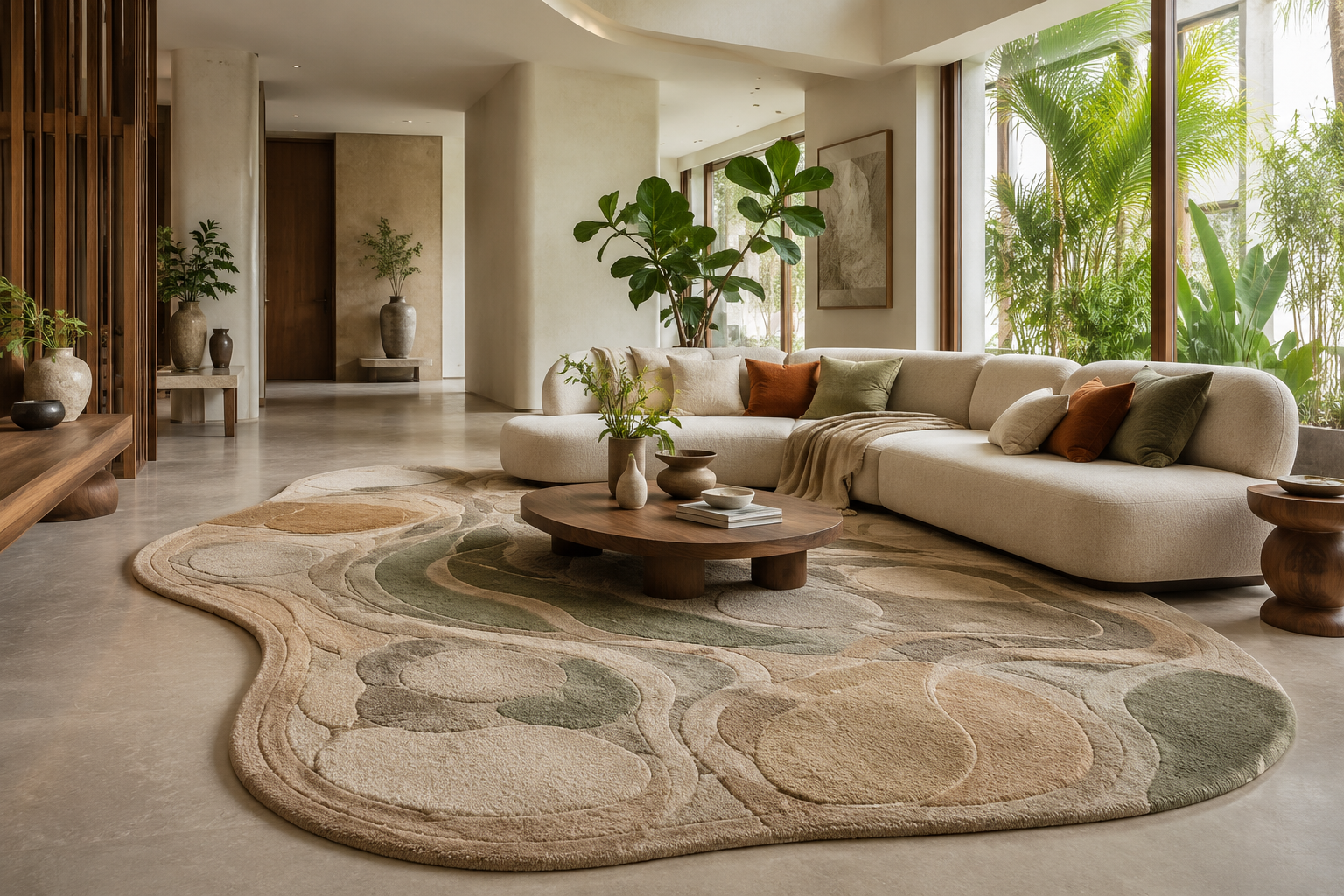
Shattering traditional floor layouts with fluid, natural geometry that breathes life into clinical spaces.
For decades, the boundaries of interior design were dictated by straight lines and sharp right angles. Rooms were square, tables were rectangular, and rugs were rigidly bound to traditional 5x7 or 8x10 dimensions. But as our urban spaces become denser and more clinical, a profound psychological shift is taking place inside modern Indian homes.
— We are craving nature —
This yearning has fueled the rise of biophilic design—the practice of connecting indoor environments with the natural world. While this movement initially showed up as indoor plants and raw wooden furniture, leading Indian interior architects are now taking it a step further. They are shattering traditional floor layouts by introducing organic, fluid, and non-rectangular rug shapes that mimic the spontaneous geometry of the earth.
Here is how breaking away from the rectangle is completely redefining contemporary Indian spaces.
The Psychology of the Curve
In nature, a perfect right angle rarely exists. Rivers curve, stones erode into smooth pebbles, and leaves unfurl in soft, asymmetrical spirals. Human brains are neurologically wired to respond to these organic forms with a sense of calm and ease.
When you step into a living room dominated by sharp edges—rectangular sofas, square coffee tables, and linear walls—the atmosphere can feel clinical, rigid, and intensely formal.
"By introducing an organic-shaped rug, you instantly disrupt that visual tension. Smooth, sweeping edges soften the hard architectural lines of modern apartments, turning a stark living space into a fluid, welcoming sanctuary."
It shifts the mood of the room from a structured, artificial showroom to a living, breathing family home.
How Organic Shapes Solve Modern Spatial Challenges
Beyond aesthetics, biophilic and irregular rugs are highly strategic problem-solvers for contemporary Indian layouts, which frequently feature open-concept floor plans and compact urban dimensions.
- Defining Zones Without Walls
In modern open-plan apartments, standard rectangular rugs can create harsh, boxy divisions that make a room feel smaller. An organic or pebble-shaped rug defines a seating zone seamlessly, allowing the sightlines to flow naturally into the dining or kitchen areas. - Maximizing Awkward Corners
Many premium Indian apartments feature unique architectural elements like curved bay windows, structural columns, or angular nooks. A traditional rectangular rug awkwardly clashes with these features. A custom, fluid-shaped rug embraces these architectural quirks, turning an odd corner into a purposeful design feature. - The Illusion of Fluid Space
Because irregular rugs don’t have hard boundaries that align with your walls, they cheat the eye. They draw attention inward to the beauty of the floor canvas, making the entire room feel more expansive and unconfined.
| Spatial Intent | Traditional Rectangles | Biophilic Organic Shapes |
|---|---|---|
| Open-Plan Zoning | Creates boxy, rigid barriers that segment and shrink the room. | Delineates space softly while keeping sightlines continuous. |
| Architectural Anomalies | Clashes with curved pillars, columns, or bay windows. | Flows elegantly around architectural anomalies. |
| Sensation of Scale | Reinforces tight wall boundaries. | Tricks the eye to make layouts feel vastly unconfined. |
3 Natural Inspirations Dominating Living Rooms
If you are looking to move beyond the rectangle, designers are drawing inspiration from three distinct biophilic archetypes:
The Riverbed Silhouette
These rugs feature soft, undulating paths that mimic the movement of flowing water or wind-swept sand dunes. They work beautifully when paired with low-profile, modular sofas, anchoring the seating arrangement with a sense of grounding tranquility.
The Overlapping Botanical
Inspired by the layering of leaves or rock strata, these designs use asymmetrical, overlapping organic shapes to create visual intrigue. Often featuring multi-level pile heights (high-low tufting), they bring a tangible, tactile piece of the outdoors inside.
The Freeform Pebble
Mimicking smooth river stones, freeform oval and rounded abstract shapes are perfect for welcoming foyers, reading corners, or beneath sculptural lounge chairs. They act less like a carpet and more like an interactive art installation on your floor.
Crafting Your Natural Sanctuary
Embracing biophilic design isn't about abandoning modern luxury; it is about making luxury feel human again. By choosing rugs that honor the unpredictable, flowing beauty of the natural world, you transform your floor into a dynamic canvas that breathes life into your architecture.
It’s time to look past the edges, break the rules of geometry, and let your living space flow.
Redefine Geometric Rules with Resha Rugs
Explore our avant-garde collections of hand-crafted organic silhouettes and biophilic statements woven specifically for modern Indian aesthetics.