

The “Thread Count” of Luxury: Why KPSI is the Secret to a Perfect Rug

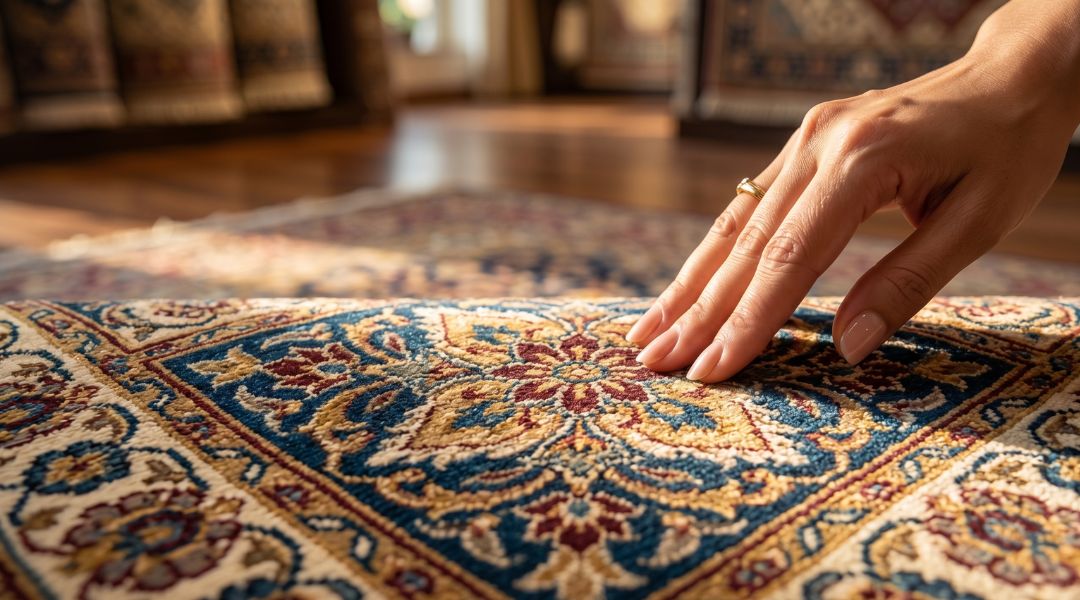
When you walk into a room and a rug immediately catches your eye—not just because of its color, but because of its incredible detail and “glow”—you are likely looking at a high KPSI.
If you are shopping for a handcrafted rug in India, you’ve probably heard the term “KPSI” thrown around by experts. But what does it actually mean for your home? Let’s break down why this little number is the ultimate seal of quality.
What exactly is KPSI?
KPSI stands for Knots Per Square Inch. Think of it like the pixels on your smartphone screen. The more pixels (or dots) you have in an inch of screen, the sharper the image looks. In a handcrafted rug, every single knot is tied by hand by a master artisan.
Low KPSI
Fewer knots, leading to chunkier designs and a thicker, more “shaggy” feel.
High KPSI
More knots, allowing for incredibly intricate patterns, thinner profiles, and a silk-like finish.
Why KPSI Matters for Your Space
1. The Detail is in the Density
High-density rugs (high KPSI) allow weavers to create curves, delicate floral motifs, and sharp geometric lines that are impossible to achieve with fewer knots. If you want a rug that looks like a piece of art on your floor, KPSI is your best friend.
2. Durability that Lasts Generations
A common misconception is that “thicker is better.” In reality, a high-KPSI rug is more tightly packed. This tightness prevents dust and grit from settling deep into the foundation, making the rug more resilient and easier to clean over decades.
3. The “Resha” Luster
When knots are packed closely together, the pile (the surface of the rug) stands upright. This reflects light more evenly, giving materials like New Zealand Wool or Tencel that signature luxurious sheen found in our Decade or Transcendent collections.
How to Check Quality Like an Expert
You don’t need a magnifying glass to spot a high-quality rug. Here is the “Resha Rule of Thumb”:
- ✓
Flip it over: Always look at the back of the rug. If the pattern on the back is almost as clear as the pattern on the front, you are looking at a high knot density. - ✓
The “Squeeze” Test: Try to pinch the pile. If you can easily feel the foundation (the “mesh” underneath), the knot density is low. In a premium Resha rug, you’ll feel a dense, firm forest of fibers.
What is the “Right” KPSI for You?
Not every room needs the highest KPSI possible. It’s all about the lifestyle fit:
For the High-Traffic Living Room:
A medium KPSI (around 60–100) provides a lush, soft feel underfoot that can handle the daily hustle of an Indian household.
For the Executive Office or Formal Den:
A high KPSI (150+) is ideal for showcasing prestige and intricate craftsmanship. These are the rugs that start conversations.
Final Thoughts
At Resha Rugs, we believe that a rug isn’t just decor; it’s the soul of the room. Understanding KPSI empowers you to choose a piece that doesn’t just look good today but retains its value and beauty for the next fifty years.
Ready to feel the difference?